
 Custom bag partner
Answer first
A Soft Layer That Bonds Behind the Shell
Pellon 986F is one current, one-sided fusible-fleece example: a soft fleece body carries adhesive on one side. When compatible with the chosen shell, that side can be fused to the panel. Another named product, Pellon 987F, illustrates that the category contains distinct loft and product choices. Neither page defines every maker's composition or a universal press setting.
If you are deciding whether a tote should feel softly supported or very firm, we can compare actual panel samples. We would not infer a fleece layer from a quilted photograph, nor promise a cushioning or wash result from the word “fusible” alone.
Original panel cross-section
Where the Adhesive Face Sits
The diagram keeps three questions apart: what the visible shell is, how the fleece attaches, and whether a lining is added. Our lining-versus-interlining Guide explains the broader middle-layer role. It does not turn any fleece choice into a fixed construction for this tote.
Choose by panel feel
Fusible Is Not the Only Route
Sew-in fleece is held by stitching rather than its own adhesive. Firmer interfacing is a different support choice when the desired panel feel is less soft. Sewable foam is another material category whose thickness and response must be checked on the selected sample. The best comparison is a small sewn panel in the actual shell, not a claim that any category is always stronger or better.
We suggest first testing the intended fabric and named fleece on a small swatch. Pellon's 986F page explicitly calls for a compatibility pre-test; the selected maker's directions should govern its own heat, pressing, cooling and care. A coated or heat-sensitive outer fabric may make a sewn-in option worth testing instead. For placement and seam-zone decisions, see the separate tote reinforcement Guide.
A useful message to send: “I want this panel to keep a soft shape. Here are my outer-fabric and fleece article numbers. Could we compare a fused sample with a sew-in option before choosing the bag construction?”
Adjacent bag form
Visible Quilting Does Not Reveal Its Hidden Layer
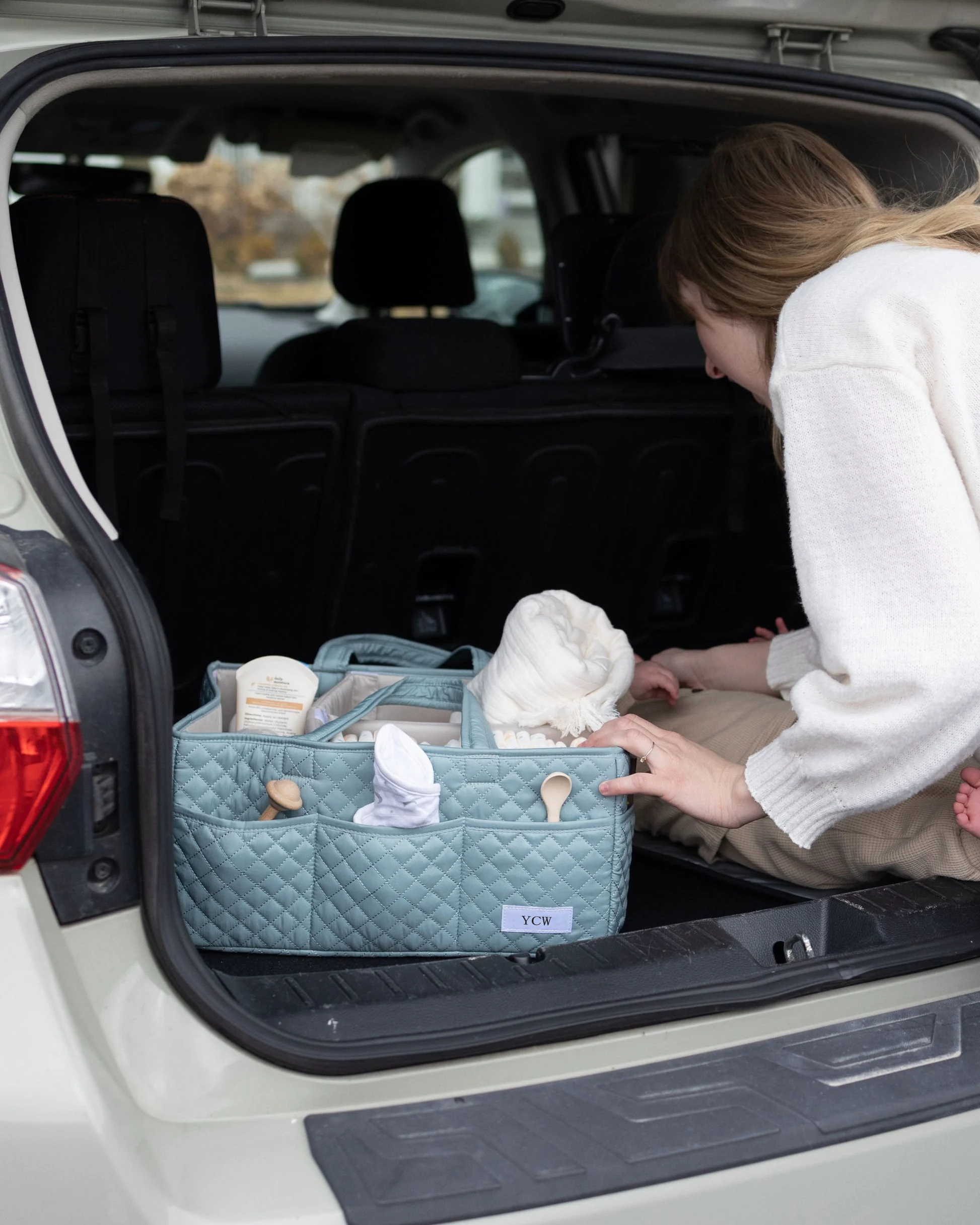
AltusPack catalog style · AP-R3-034
Custom Quilted Diaper Tote Bag with Bottle Pockets
What the photo shows: A quilted blue organizer tote with side pockets and an open interior.
How to use this example: It gives us a panel form to discuss; a different supporting layer could be tested on a proposed sample.
Evidence limit: Neither the visible quilting nor the catalog name verifies fusible fleece, fibre, loft or construction inside this bag.
Source and limits
Named Maker Products, Not a Universal Formula
Pellon 986F supports the one-sided adhesive and swatch-test explanation; its exact fibre, care and pressing instructions are for 986F. The 987F maker sheet is a separate product example. The schematic and sample-comparison questions are editorial explanations. The AP-R3-034 photo is a first-party exterior observation only; no internal fleece or finished-bag test is verified.