
 Custom bag partner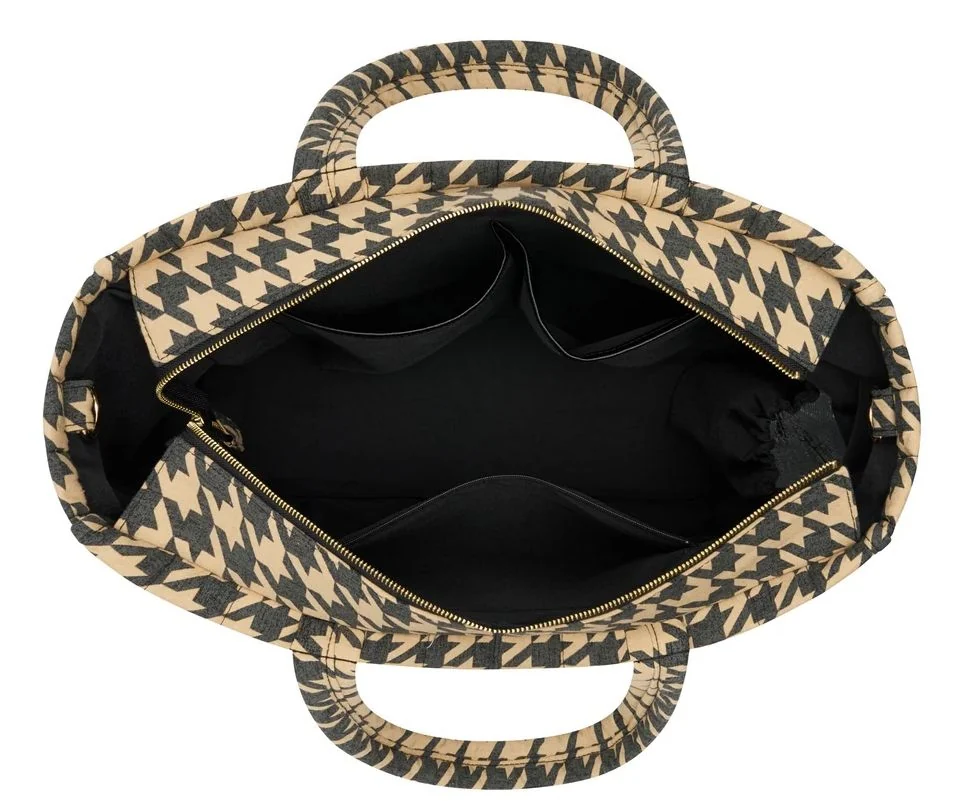
Answer first
Three Different Jobs in One Bag Panel
Read the panel from outside to inside: shell for the visible exterior, a possible intermediate support layer to change how a panel holds its form, and lining for the surface next to the contents. The lining can carry pockets, hide inner seams and separate belongings from the shell. An interlining may be present only in selected panels, and it may not be visible without opening a sample or checking the construction sheet.
“Interfacing” is often used for a support material, but supplier labels are not a universal layer map. Ask where the material sits and what it is meant to do before treating “interfacing” and “interlining” as equivalent. Our lining guide covers the visible interior fabric; this page focuses on the layer between that fabric and the shell.
How layers meet
A Middle Layer Is Not Always Fusible
One possible construction bonds a support layer to another fabric with a thermoplastic adhesive and heat. That is a fusible option, not a definition of all interlining. A separately held or sewn support layer is another possible route; the actual method must be specified for the selected bag and material.
If a fused option is proposed, review the exact fabric-and-support combination in a sample. Bonding can change the panel's hand and drape, and a poor match can show adhesive at the face, separate later or react differently to care because the layers shrink at different rates. A photograph of a bubble or stiff panel cannot identify the cause or provide a fusing recipe.
Some support materials obtain stiffness from fabric construction or finishing rather than being adhesive-backed. The word “stiff” alone therefore does not tell you how the layer is made, attached or how it will behave after care.
Before approval
What to Confirm on the Actual Sample
- Map the panels: mark where the shell, any intermediate layer and the lining are used. Ask for a small layer stack or construction drawing for each panel that needs support.
- Name the materials and attachment: record the supplier's material references and whether the middle layer is bonded, sewn or otherwise held in place. Do not accept “interlining” as the whole specification.
- Handle and flex the assembled bag: compare the intended shape, fold points, seams, pocket openings and inside feel. Look for visible adhesive, separation or unwanted distortion where relevant, without assuming any one symptom has a single cause.
- Agree the use and care checks: tell the sampler what the bag will carry and how it may be cleaned. Any appearance, stiffness or durability requirement needs an agreed sample and, where necessary, a project-specific test method.
A useful sample request: “Please label the shell, each support layer and the lining on this panel. Show where the layers join, and send the assembled sample so we can compare shape, inner feel and edge finish before approval.”
Use the materials guide to review the wider material system, and the sample guide to plan a physical review.
Visual reference
An Open Bag Shows Only the Exposed Layers
The open stroller organizer tote reference shows a patterned exterior, dark interior surface and pockets. Those visible areas help a buyer mark where an outer and inner material meet. The photo cannot reveal whether this product has an interlining, how any hidden layer is attached, or how another bag will perform.
Sources and limits
Where the Layer Questions Come From
Ann Saunders, Design, Manufacture and Sell Your Bag Collection (first published 2024), PDF pp. 147-151, describes lining's interior roles. Textiles, 6th edition (1988), Chapter 31, PDF p. 300, describes fusible support as one adhesive-bonded option and notes possible bleed-through, separation, differential shrinkage and changed hand or drape. Chapter 22, PDF p. 212, gives examples of fabrics stiffened by construction or finishing. These are general textile explanations, not a specification for every modern interlining or proof of any current AltusPack material, hidden bag layer, fixed pressing setting or finished-bag result. Confirm the actual construction and agreed checks on the proposed sample.