
 Custom bag partner
Answer first
Nylon Fibre Plus a Bonding Treatment
Thread maker Coats describes its Nylbond product as a bonded continuous-filament nylon 6.6 sewing thread. For that named thread, Coats says the bonding helps prevent its plies from separating or untwisting and helps it trim cleanly. That makes the term easier to understand, but Nylbond's exact chemistry, grade and certifications are specific to Coats.
Other bonded nylon threads may have different yarn, size, bond, lubricant and sewing behavior. A supplier article code and data sheet tell you more than the generic label.
Do not mix thread structures
Bonded Is Not the Same as Core-Spun
Bonding holds together the components of a thread that could otherwise separate during handling. Core-spun describes a different structure: a core with another fibre around it. The older textbook Textiles describes a polyester-filament core wrapped in cotton as one sewing-thread example. That book does not define bonded nylon; it illustrates why two threads can look similar yet be built differently.
Thread construction is also separate from the fabric yarn used in the bag body. Our fabric-yarn guide deals with cloth specifications; the bag-seam guide explains how panels are joined. Neither a thread name nor a neat visible stitch proves seam strength, because stitch type, density, needle, material layers and edge placement also matter.
For a custom bag brief
Ask Which Thread and Which Seam
We can discuss a thread option once we know the bag material, visible stitch preference and where the seam sits. If you only ask for “bonded nylon everywhere,” the missing question is whether that exact thread is suitable for each seam and the sewing equipment. A named thread can be appropriate in one application without being the right choice for every panel or trim.
- Record the supplier, article code, fibre and thread size.
- Ask which seams would use it and why, including handle or strap attachments if relevant.
- Check a physical seam sample for balanced stitches, puckering, skipped stitches and trimming.
- Agree on a project-specific seam or finished-bag test before making any strength claim.
A useful message to send: “For this tote's handle attachment, I would like to compare a bonded nylon thread with the proposed standard thread. Can we review the exact thread codes and a sewn sample on my chosen fabric?”
A visible seam reference
Photos Can Locate a Seam, Not Identify Its Thread
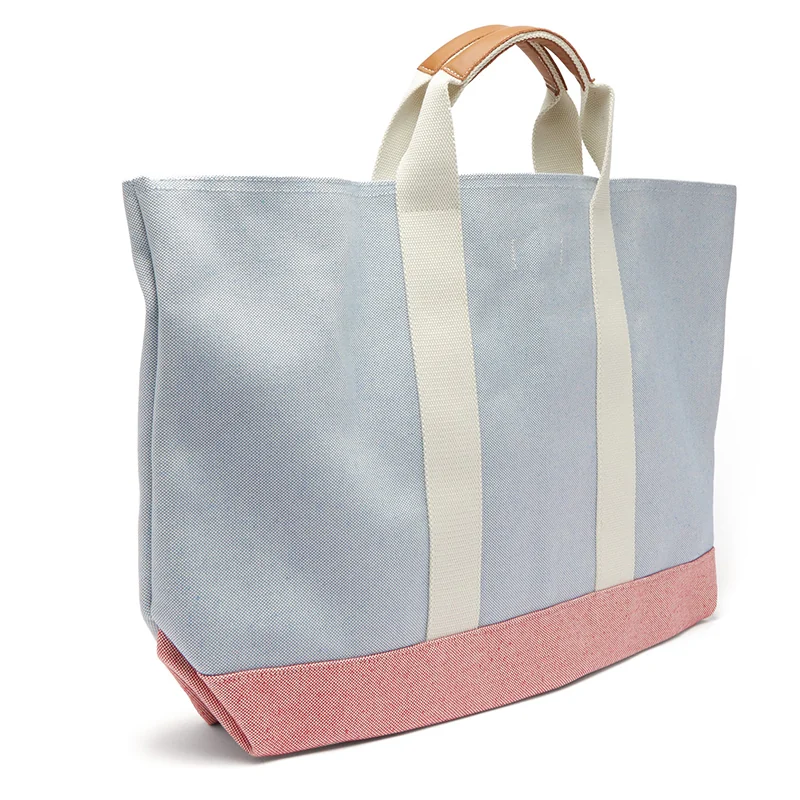
AltusPack catalog style · AP-R3-032
Custom Waxed Canvas Beach Tote Bag with Zipper Closure
What the photo shows: Two handles and visible panel edges where seam questions may arise.
How to use this example: Mark the seam you want to discuss, then request the thread code and a physical sewn sample for that construction.
Evidence limit: This image cannot identify a thread's fibre, bonding, size, supplier or the strength of a hidden stitch line.
Source and limits
What the Sources Establish
Coats' Nylbond page defines one named bonded nylon 6.6 thread and its claimed sewing behavior; it does not identify this catalog style's thread. Textiles, 6th ed. (1988), PDF pp.170-171 / book pp.161-162, describes different core/wrapped thread structures, not bonded nylon. The seam-selection questions above are AltusPack editorial advice, not a finished-seam test result.