
 Custom bag partner
Answer first
The Label Describes a Surface, Not the Whole Bag
In Ann Saunders' bag-making text, one PU material is made by bonding resin and colour to a fabric substrate. Coatings specialist Stahl also describes PU-coated textiles. But the Competition Bureau of Canada records another use of the words in furniture: bi-cast leather is split hide with a PU surface. That furniture example is a warning about terminology, not proof that a particular bag contains hide.
So a product title, a close-up photograph or a leather-like grain is not enough to establish whether a proposed bag material is animal-free. Equally, the word PU does not prove that a finished bag is waterproof, long-lasting, certified or made from one standard recipe.
The useful distinction
Ask What Is Under the Coating
Suppose two swatches look almost identical from the face. If one is PU-coated textile and the other is PU-coated split leather, their material identity and possible labeling differ even before you discuss thickness or finish. We would suggest requesting a cross-section or supplier construction sheet with the named substrate, coating and any other layers. If an animal-free requirement matters, ask for explicit material documentation rather than relying on the retail name.
This is separate from PUL laminated fabric, where the specific laminated textile construction is the subject. For broader material comparisons, see choosing bag materials; for care decisions on an identified material, use the material-care guide. None of those pages can identify a hidden backing from a bag photo.
For a custom-bag discussion
A Short Brief Can Prevent a Wrong Assumption
We can help compare a proposed swatch with the look and feel you want. The point that may stop a firm quote or material claim is the supplier's actual construction, not the absence of a more elaborate mood board. If details are missing, these questions are worth settling first:
- What are the supplier article number, substrate and coating layers?
- What thickness, backing hand, surface texture and colour are specified for this exact article?
- Does your target market need an animal-content, labeling or test statement? If so, what documents support it?
- How does the chosen swatch behave when sewn into the proposed bag sample? Check claims against that sample rather than the coating name.
A useful message to send: “I like this PU-leather look, but I need to know the backing before approving the material. Here is the supplier article and swatch. Can we compare it with my reference bag and confirm the wording for my market?”
PU-labelled catalog style
Use the Look as a Reference, Not a Material Certificate
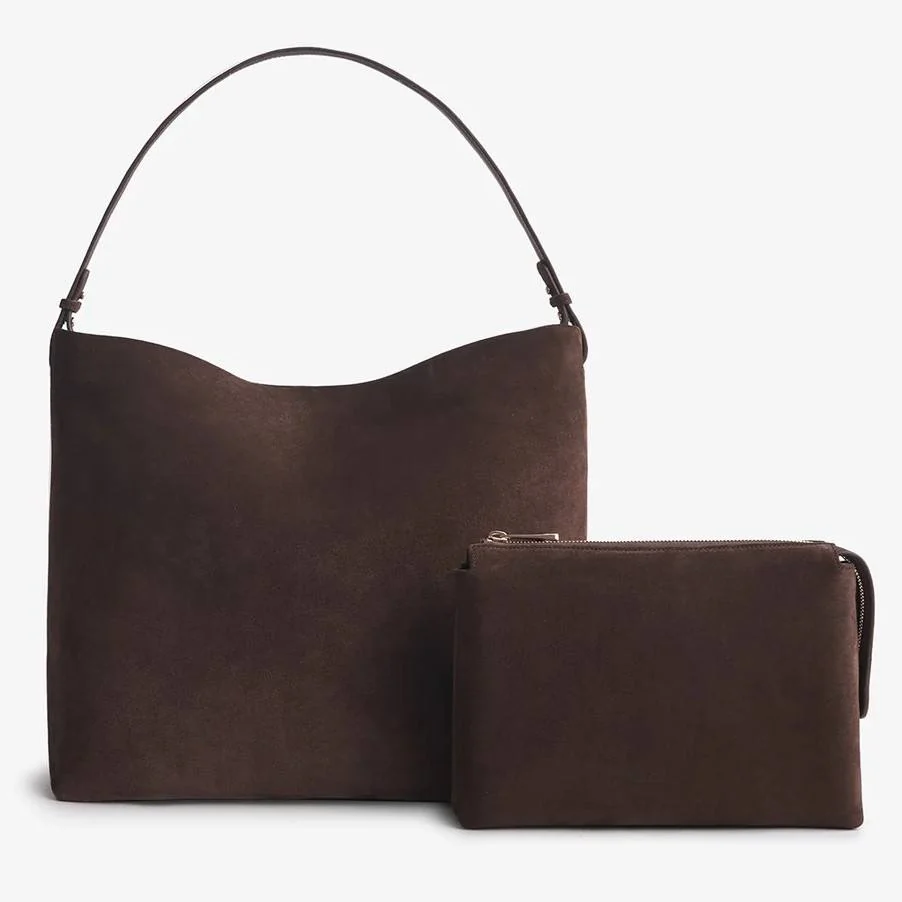
AltusPack catalog style · AP-R6-032
Custom Pu Leather Diaper Bag
What the photo shows: A brown, leather-like shoulder bag with a matching pouch.
How to use this example: Point to its silhouette and surface appearance when discussing a candidate material and sample.
Evidence limit: Its PU-labelled title is a style reference. The catalog says final material is confirmed by project; this image does not establish a textile or leather backing, animal content or performance.
Source and limits
Which Statement Comes From Where?
Ann Saunders, Design, Manufacture and Sell Your Bag Collection, PDF p.136/book p.113, gives a textile-backed PU example. Stahl currently describes PU coatings for textiles. The Canadian furniture terminology sheet documents a different PU-leather usage in that category. The proposed questions are editorial buying advice; the AP-R6-032 title and image are first-party catalog observations. None of these sources verifies the hidden layers or a test result for AP-R6-032.