
 Custom bag partner
Answer first
Viscose Names a Fibre, Not a Complete Fabric
Cellulose is processed and formed into new fibres to make rayon. Viscose identifies the predominant rayon form; it does not describe every possible rayon variety. A supplier may describe a fabric as viscose or rayon, so ask which fibre is actually offered and whether it is blended with anything else.
Neither name tells you whether a proposed lining is woven or knitted, how heavy it feels, what finish it has, or how it will behave after cleaning. Those details belong to the exact fabric and finished bag. Our lining selection guide starts with the bag's use and interior layout rather than the fibre name alone.
Avoid name shortcuts
Rayon and Viscose Are Related, Not Blanket Synonyms
The US Federal Trade Commission notes that the ISO name viscose refers to the predominant form of rayon. That is a useful translation between naming systems, not permission to assume every fabric sold as rayon uses the same process or has the same performance.
Older textile references distinguish regular viscose rayon from modified varieties. They also describe how fibre structure can affect wet handling and appearance. Those historical descriptions explain why the name alone is insufficient; they are not test results for a current lining. Do not assume a lining can be washed like cotton simply because both originate from cellulose. Follow the proposed fabric's and finished sample's care information instead.
Before sampling
Ask for the Exact Lining, Then Review It in the Bag
- Identify the fabric: request a swatch and the supplier's fibre description, including any blend. Record the fabric construction and finish, not just “rayon lining.”
- Check the hand and look: compare the swatch in the intended colour and under the light your buyer will see. Check how it sits at pockets, curves and the opening.
- Agree care and use: tell the supplier what the bag will carry and how the lining is expected to be cleaned. Ask what evidence supports the proposed care instructions; do not infer washability from a soft drape.
- Review the prototype: handle the assembled bag, inspect rubbing points and pocket edges, and compare the lining after any agreed cleaning or wear checks. Agree the method and acceptance criteria before treating a result as a performance claim.
A useful sample request: “Please send the proposed lining swatch with its fibre content, construction, finish and care information. Use that exact fabric in the bag sample so we can review the pockets, opening and handling together.”
See the prototype review guide for the wider approval process and the bag brief guide for recording the agreed material and construction.
Apply this guide to a catalog style
Treat viscose as a proposed lining option for this interior
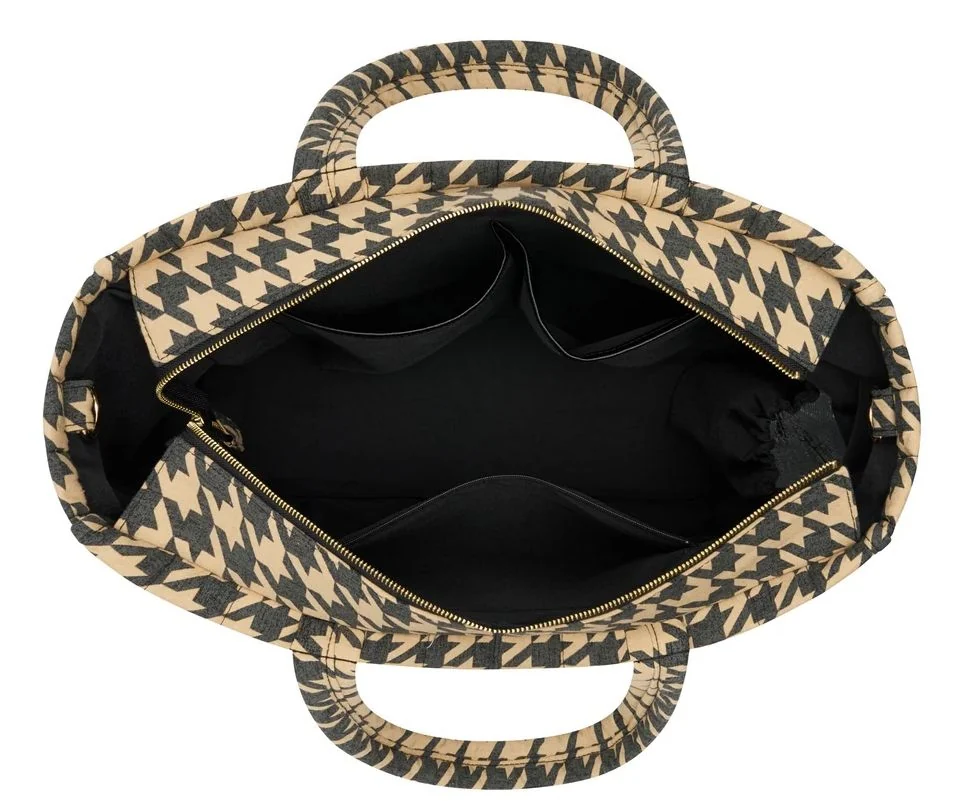
AltusPack catalog style · AP-R4-014
Custom Polyester Portable Baby Hanging Stroller Organizer Diaper Tote Bag
What the photo shows: The open organizer photo shows a dark inner surface and pockets that a lining brief would need to cover.
How to use this example: If you want viscose for a similar interior, request a labelled swatch and supplier composition for that proposed material. Check its appearance, cleaning context and any required colour-transfer evidence on a sample before approving it.
Evidence limit: This pictured catalog style is not evidence that the existing interior is viscose or rayon.
Source and limits
How the Terms Were Checked
The Federal Trade Commission's textile naming guidance, under “ISO Names Permitted,” describes viscose as the predominant form of rayon. Textiles, 6th ed. (1988), Chapter 9, PDF pp. 91-95, explains regenerated cellulose and historical rayon varieties. The book does not verify any current supplier fabric, finished bag or care claim. Ask for current material documentation and test the actual sample for the intended use.