
 Custom bag partner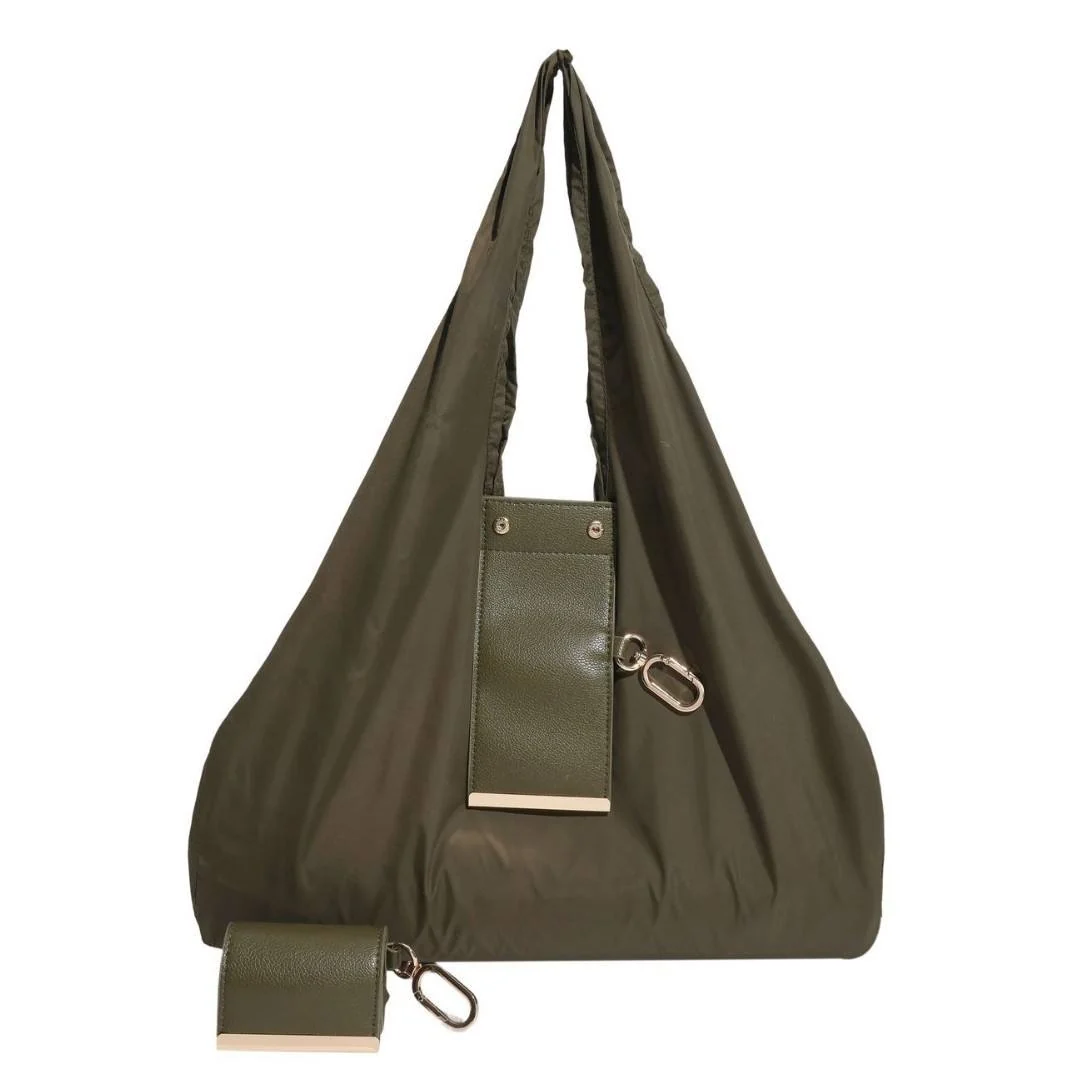
Answer first
Loops Compared with Interlaced Yarns
A knit is built from connected loops of yarn. A woven fabric has lengthwise and crosswise yarns interlaced with each other. This is a difference in construction, not a fibre name: either structure can be made with different yarns and finishes.
Our woven fabric guide explains plain and twill crossing patterns within the woven family. A nonwoven fabric starts from a fibre web that is bonded or entangled; it is neither the connected-loop nor the interlaced-yarn structure discussed here.
Under use
Stretch Is Not the Same as Recovery
Knit loops can change shape as a fabric extends, even without an elastic fibre. The amount of extension depends on the knit construction, yarns and any stabilising elements. Woven fabric can also move or stretch depending on its construction and components. Neither category has one universal stretch value.
For a bag, ask what happens after a panel is loaded and then unloaded: does it return to its intended size, or does it remain stretched? Initial stretch does not prove recovery or long-term shape retention. A lining, backing or inserted stabilising yarn may change the result, so compare the exact proposed construction in a sample.
Edge behaviour also depends on the particular knit. Rib and interlock structures are not interchangeable, and neither name guarantees that a cut edge cannot unravel. The supplier should show how the chosen material will be cut, joined and finished at openings and seams.
Before sampling
What to Confirm for a Bag Material Brief
- Name the exact construction: request the supplier's fabric code, fibre and yarn details, knit or weave type, weight, finish and any backing. A label such as “knit” is not a complete specification.
- Mark the intended areas: identify where the fabric would be used, such as the body, pocket, lining or trim. Note panel direction, handle attachment and any place that must hold its shape.
- Check movement and return: compare swatches and a prototype under the intended load and after unloading. Agree how extension, recovery and any shape change will be observed or tested.
- Review edges: inspect cut edges, seam joining, openings and the effect of backing or lining on the finished shape. Ask how the selected knit behaves if a yarn is broken.
A useful request: “Please send the exact knit and woven options with construction, yarn, backing and swatches. Show how each panel holds its shape after loading and how cut edges and seams will be finished.”
Use the bag materials guide for the wider shell, lining and trim decision, and the sample guide for the assembled bag review.
Shape reference
Use a Product Photo to Mark Panels
The foldable tote reference shows a carry shape, strap and pouch detail. It can help identify where a proposed material would sit on a bag. Its title and photo do not verify a knit or woven structure, stretch, recovery or performance for a new order.
Source and limits
Where the Structural Comparison Comes From
Textiles, 6th edition (1988), Chapter 20, PDF pp. 194-197, distinguishes connected knit loops from interlaced woven yarns. Chapter 28, PDF pp. 258-259, discusses extension from loop movement and stabilising constructions; PDF pp. 269-272 describe rib and interlock edge exceptions. These historical descriptions do not verify any current supplier fabric, fixed strength or stretch ranking, edge guarantee or finished-bag performance. Confirm the exact fabric and prototype before making a claim.