 Custom bag partner
Answer first
What Is Woven Fabric?
Woven fabric is made by interlacing two sets of yarns, usually at right angles: lengthwise warp and crosswise weft. The crossing pattern is the weave. It tells you how the yarns are arranged, but not which fibre they contain, how heavy the finished fabric is, or how a completed bag will perform.
This is a construction question. Our Oxford, canvas and duck guide explains why commercial fabric names need their own specification; it does not define the plain and twill crossing patterns compared here.
Two crossing patterns
Plain Weave and Twill: What Changes?
Plain weave
Each weft yarn alternates over and under successive warp yarns, with the next row reversing the sequence. It is a pattern, not a grade: plain-weave fabrics can be light or heavy. Yarn size, spacing and finishing still change the fabric you receive.
Twill weave
The crossings shift from row to row, creating a diagonal line and longer yarn floats. The cited textile reference describes twill as often more pliable than a comparable plain weave, but a different yarn or density can change the comparison. A diagonal appearance alone is not a test result.
Neither term proves that one supplier's fabric is stronger or better for your bag. Twill can accommodate a different yarn density, so even a strength comparison changes when density is changed. Compare like-for-like samples and the specified test results for the use that matters to you.
Before sampling
What to Put in a Bag Fabric Brief
- Identify the actual option: ask for the supplier's fabric code, fibre content, plain or twill weave, yarn description, finished weight and usable width. A weave name by itself is not a purchase specification.
- Record the finish: confirm coating, backing, colour and hand feel on a physical swatch. Compare the same bag panel and intended lining, not isolated marketing names.
- Check the built bag: review seams, handles, pockets, zipper area and logo application in a prototype. If a load, abrasion or water-related claim matters, agree on the test method and evidence for the selected fabric and finished construction.
A useful request: “Please send the exact plain- and twill-weave options with fabric codes, composition, yarn and finished-fabric specifications, finishes and swatches. Which test results apply to each option?”
For yarn numbers such as denier, use our yarn specification guide. To compare shell, lining and trim choices together, see the bag materials guide.
Shape reference
See Where Fabric Choice Meets Bag Construction
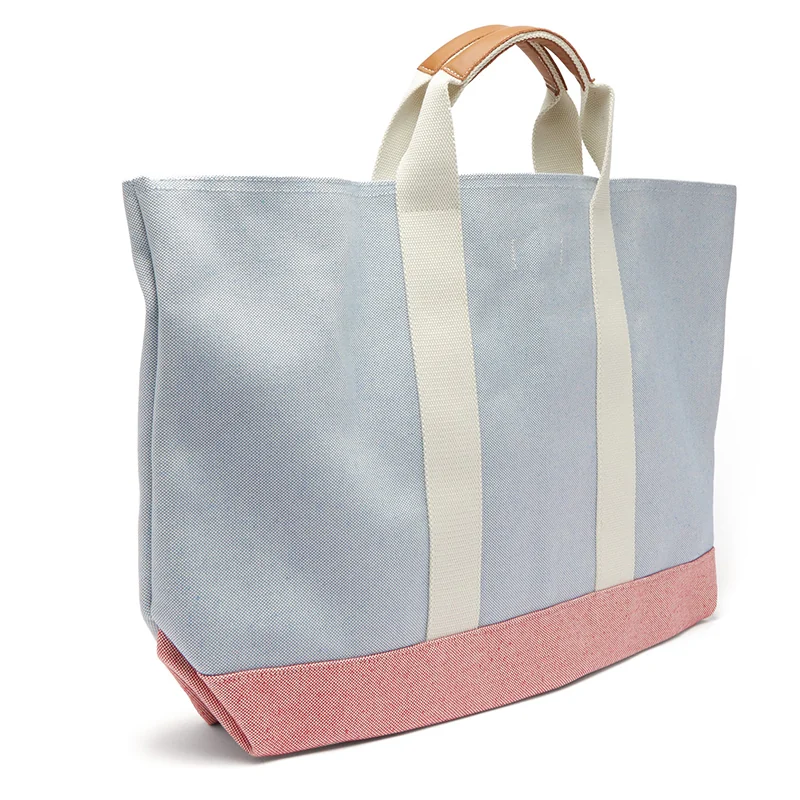
The beach tote reference shows a full bag shape, webbing handles and a zipper opening. Use its photos to discuss panels and details. The listing name or photos do not verify the fabric's plain or twill weave, fibre, finish or performance for a new order.
Source and limits
Where the Definitions Come From
The woven-fabric overview comes from Textiles, 6th edition (1988), Chapter 20, PDF pp. 194-197. The plain-weave description is from Chapter 22, PDF pp. 210-217; the twill description and conditional comparison are from Chapter 23, PDF pp. 219-224. These explain textile structures, not the composition or test performance of a current supplier fabric or any AltusPack product. Verify each proposed material against its current specification, swatch and relevant tests.