
 Custom bag partner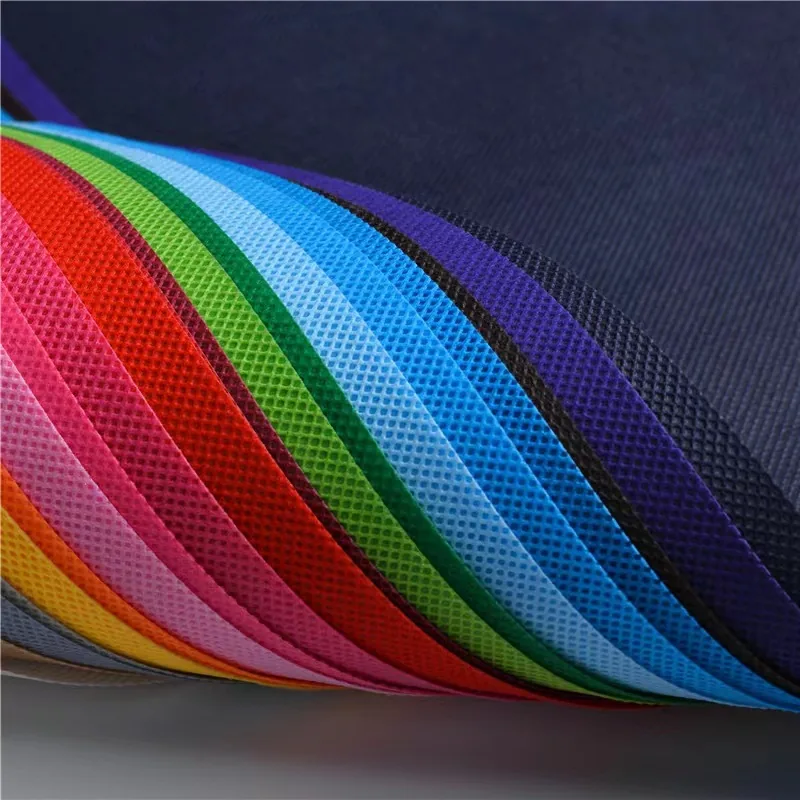
Answer first
A Fibre Web, Not a Woven Yarn Grid
Nonwoven fabric is made by laying fibres into a web and then holding that web together through mechanical entanglement, heat bonding or an adhesive binder. How the fibres are arranged, and how they are joined, affects the finished material. Unlike woven fabric, its basic structure is not a crossing grid of warp and weft yarns.
“Nonwoven” therefore names a construction family, not a specific fibre, thickness or quality level. A supplier's exact material specification and swatch are needed before a bag design or performance claim can be approved.
Construction terms
Process Names Are Not Interchangeable
Spunbond
Continuous filaments are laid into a web and then bonded. The term describes a formation route; it does not by itself identify the polymer, finished weight, bonding details or bag performance.
Hydroentangled
Water jets entangle fibres in a web. This is a distinct consolidation method, not another name for spunbond or an assurance that the resulting fabric is washable.
Meltblown
A polymer stream and high-speed hot air form a fibre web. The name does not prove filtration, hygiene or medical suitability for a particular finished item.
Needle-punched
Barbed needles move fibres through the web so layers entangle. “Felt” in a product name is not proof of wool: traditional wool felt and needle-punched fibre webs have different formation routes.
Thermal bonding and adhesive bonding describe other ways to hold a web together. Ask which formation and bonding steps apply to the offered material rather than treating all these labels as equivalent. Fibre direction also matters: a web laid predominantly in one direction may behave differently across it, while random lay does not guarantee equal strength in every direction.
Before sampling
What to Confirm for a Bag Material Brief
- Identify the actual fabric: request the supplier's material code, fibre composition, web-formation process, bonding method, finished weight, thickness and usable width. If there is a backing, coating or laminate, record its layers separately.
- Compare the supplied swatches: inspect surface, hand feel, edge treatment and print area. Ask whether web direction matters for the proposed bag panels and handle attachment.
- Check the completed construction: sample the seams, opening, handles and any repeated folds. Define a test method and result for a required strength, wash, abrasion or other claim rather than assuming it follows from the word “nonwoven”.
A useful request: “Please send the exact nonwoven fabric code, fibre content, formation and bonding method, finished specifications and swatch. Which test results apply to this fabric and our intended bag construction?”
For the wider shell, lining and trim decision, see the bag materials guide. For reusable-shopping-bag requirements and end-of-use claim boundaries, see the shopping-bag brief; this page does not establish recyclability or compostability.
Shape reference
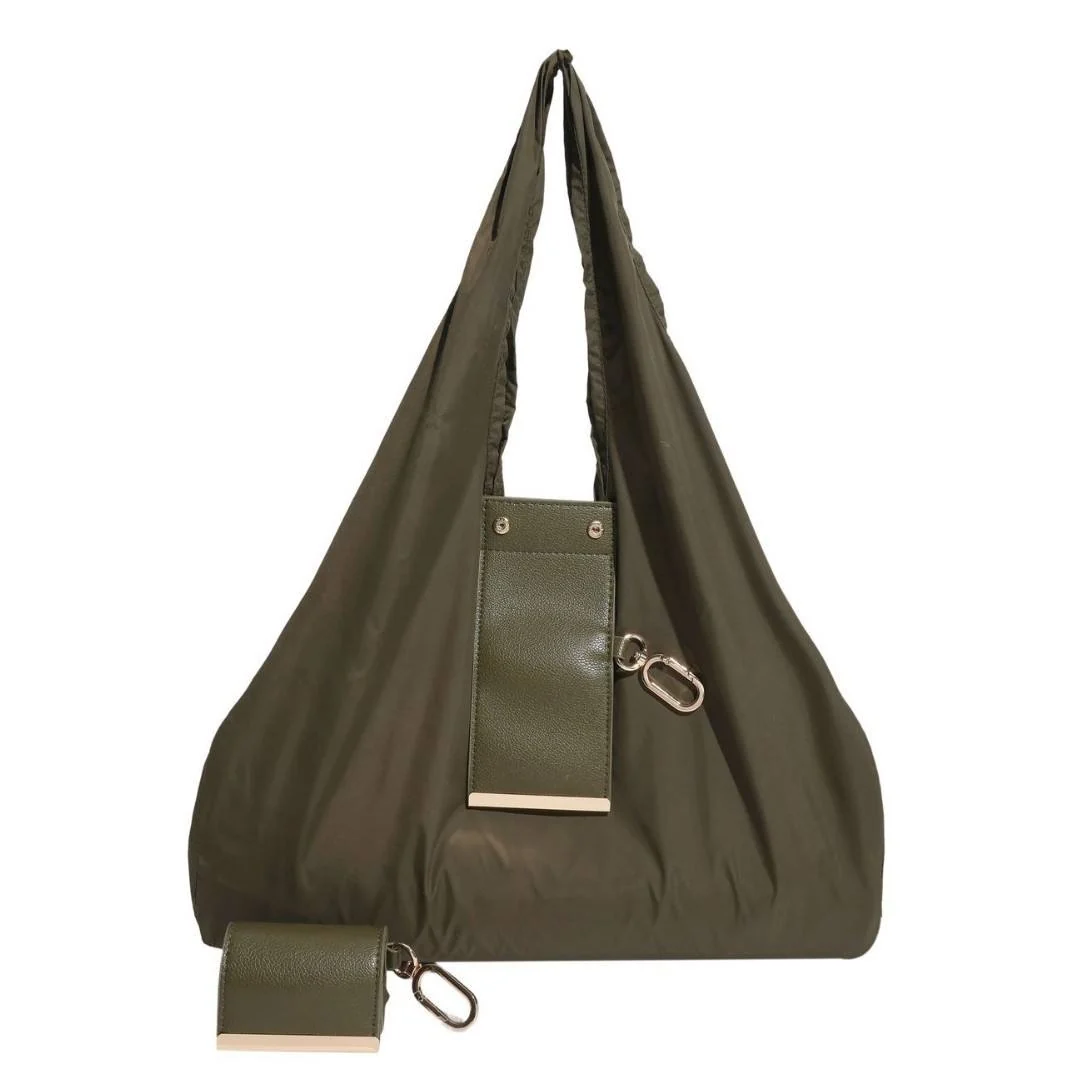
Use a Bag Photo for Form, Not Fabric Proof
The foldable tote reference shows a carry shape, strap placement and a compact pouch detail. Its title and photos do not verify nonwoven construction, fibre, bonding process, strength, washability, recycling route or medical suitability for a new order.
Source and limits
Where These Definitions Come From
The fibre-web and bonding overview, process examples and felt distinction come from Textiles, 6th edition (1988), Chapter 31, PDF pp. 296-301. This historical textbook explains construction concepts, not the composition, process or test results of a present-day supplier fabric or AltusPack product. Confirm each current specification, sample and claim-specific evidence before selecting or marketing a bag material.