
 Custom bag partner
Answer first
Hand Is What the Fabric Feels Like
In Textiles, hand is the sensation you get from a fabric by touch, including contrasts such as slick and soft, or bulky and thin. It can be judged between your fingers and thumb or against the skin. Words such as “premium hand” are too vague on their own: two buyers can touch the same cloth and prefer it for different purposes.
If you are selecting a bag fabric, it may help to say what you actually want to feel. Is a lining meant to slide against its contents, or is a tote body meant to feel structured when picked up? Those are different briefs, even if both fabrics have the same stated weight.
Avoid mixed terms
Hand, Texture, Drape and Weight Are Not Interchangeable
Texture describes the nature of the surface, which you may see as well as touch. Drape describes how cloth falls over a three-dimensional form. Hand is the tactile impression when handling the cloth. A fabric can look textured yet feel smoother than expected; a soft touch does not prove that a filled bag will hold its silhouette.
Fabric weight in GSM or ounces is another field, not a hand score. Strength, abrasion resistance, coating performance and finished-bag behavior need their own evidence. If you are comparing materials, our broader bag-material selection guide places these questions alongside the intended use.
For a custom bag brief
Compare Real Swatches Before Choosing a Feel
We can help narrow the options once we know the bag shape, expected contents and whether you want it to stand, fold or compress. If those details are missing, “soft fabric” can send sampling in the wrong direction: it may describe the surface, the body of the bag, or both.
- Share a reference: a physical bag or fabric swatch is more useful than a photo for tactile feel.
- Name the contrast: try “smooth outside, firmer body” or “soft lining, structured shell” instead of a single adjective.
- Keep the swatches together: compare them by touch in similar conditions and label which panel each would become.
- Check the sample: handle the made-up bag with its intended contents before approving the material and construction together.
A message you could send: “For this tote, I would like a softer surface but a body that does not collapse when lightly filled. I have a reference swatch. Can we compare it with two alternatives and check the first bag sample?”
Apply this to a catalog style
Use the Silhouette to Ask Better Material Questions
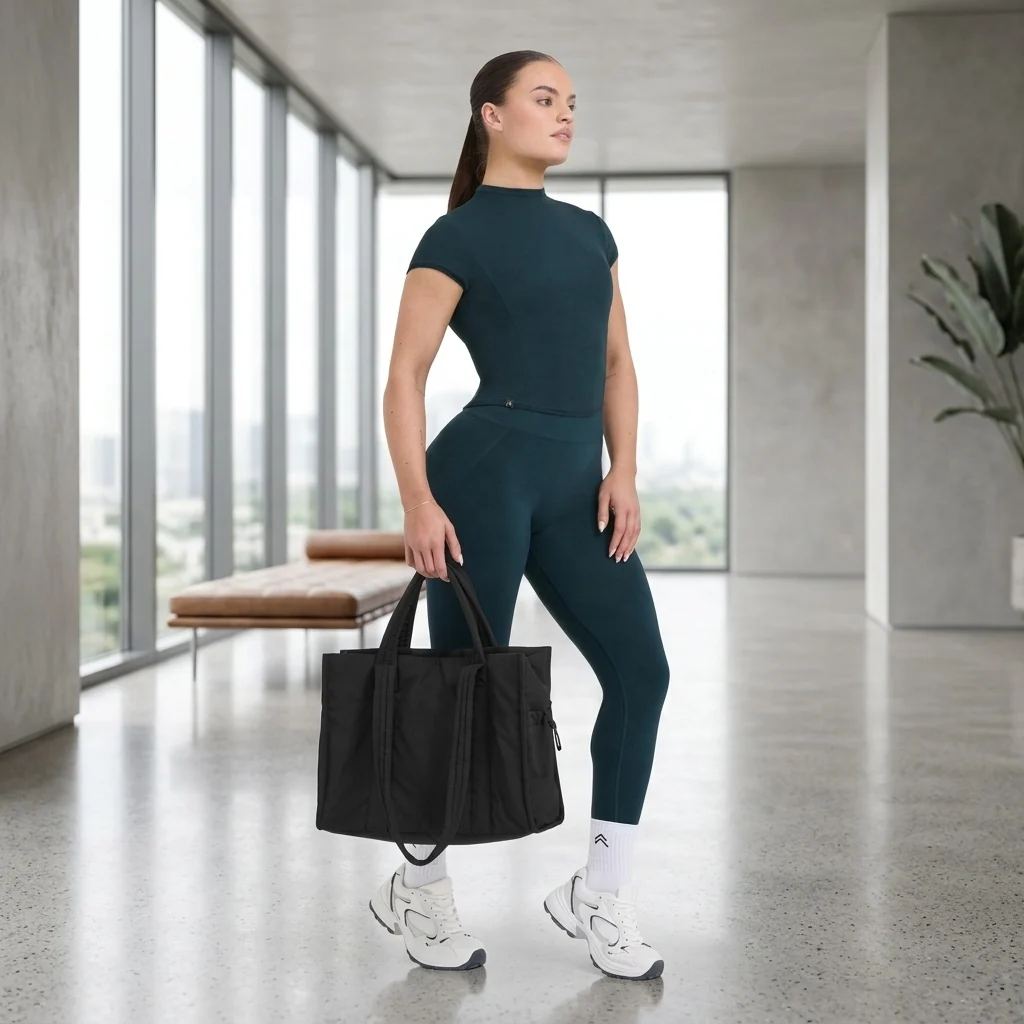
AltusPack catalog style · AP-R3-038
Custom Cotton Puffer Tote Bag with Zipper Closure
What the photo shows: A tote silhouette with two handles and a padded-looking body.
How to use this example: If this shape interests you, tell us whether you mean the outer surface, padding or lining when you describe the feel. A swatch and sample can then answer different questions.
Evidence limit: The photo and catalog name do not prove fibre content, tactile hand, padding specification, strength or finished-bag performance.
Source and limits
What Supports This Definition
Textiles, 6th ed. (1988), Chapter 2, PDF p.21 / book p.12, defines hand and distinguishes texture and drape. B. P. Saville, Physical Testing of Textiles (1999), Chapter 10, PDF p.274, describes subjective handle factors and attempts to measure their components. The swatch comparison and bag-brief examples above are AltusPack editorial advice, not a universal test method or product-specific result.