
 Custom bag partner
Answer first
Choose by Opening Behavior, Then Specify the Part
A useful first comparison is between a closure that follows the full opening, one that catches a flap at a point, and one that cinches the mouth. None can be selected responsibly from a photo alone. The opening shape, contents, expected load, hand movement and desired access all affect what you need to try on a sample.
Ann Saunders describes locks, magnets and zips as different closure routes and draws attention to alignment, separation under load and the path a zip must follow. Those are checks to discuss, not a universal ranking of strength, security or service life. Our trims and hardware guide covers part-level details such as zipper pulls; this page helps you decide what the opening needs to do.
Options to discuss
What Each Closure Asks You to Check
Zipper
Use the actual bag opening to review the zipper's route, length and access. At a sharp turn or crowded corner, ask how the slider will travel without forcing it. Inspect tape, teeth, slider and stops on the proposed sample.
Magnetic flap
Try the flap with the bag carried as intended. Check whether the two parts meet naturally and whether a filled bag or strap tension tends to pull them apart. The needed retention is a project question.
Lock or clasp
Check the two parts at the finished opening, not only as loose hardware. Watch for awkward alignment, unintended release and rubbing or scratching where the parts meet.
Drawstring or open top
A drawstring gathers the mouth; an open top has no fastening at that point. If either is in your brief, show how wide the opening should remain during access and how the contents should be retained while carried. These are editorial comparison questions, not test results from Saunders.
A flap can also combine more than one element. Name the actual closing mechanism and show it on the bag drawing so a supplier does not interpret “flap closure” as a complete hardware specification.
Before approval
Try the Closure in the Intended Use
- Mark the opening: show where it starts and ends, what must fit through it and whether pockets remain reachable.
- State the carry condition: describe the intended contents, fill level and strap or handle use. Then check the sample in that condition.
- Repeat normal opening: note alignment, snagging, catching, unwanted release or uncomfortable hand contact. Record the exact location and action if a problem appears.
- Approve the actual part: identify the proposed component, finish, placement and any test method or acceptance criterion your project needs. A smooth first opening is not a lifetime result.
A useful message to send: “This bag will be opened repeatedly while carried by the top handle. Please show the proposed closure on the filled sample, including the opening path and the part specification, so we can review access and unintended opening.”
For a wider sample review, use our prototype guide. If the brief includes a water claim, treat the closure and seams as part of the separate water-resistance discussion.
Apply this guide to a catalog style
Mark the Opening on a Multi-Pocket Backpack
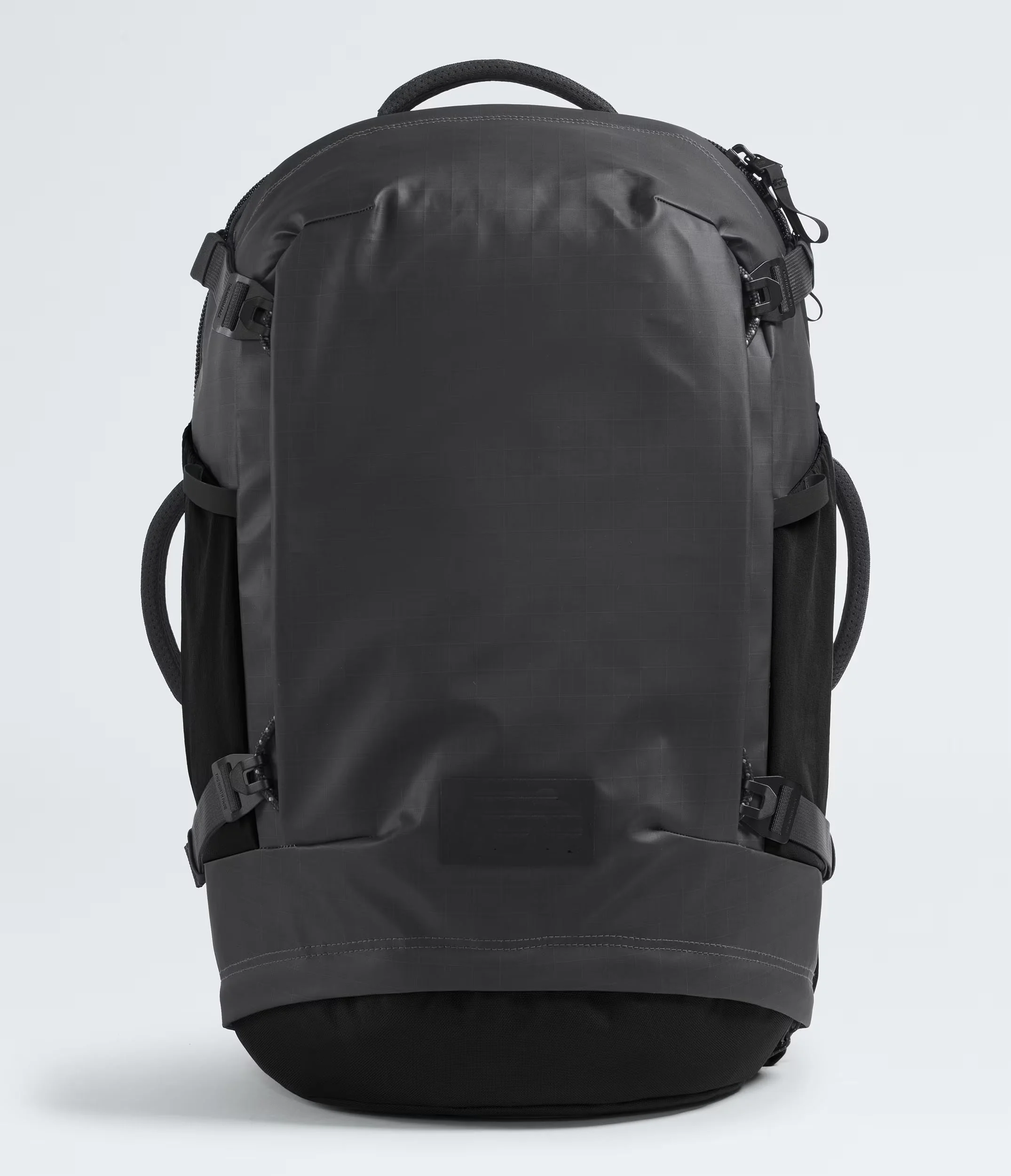
AltusPack catalog style · AP-R3-041
Custom Business Laptop Backpack with Multi-Pocket Layout
What the photo shows: A backpack front, top handle and a zipper pull near the upper side.
How to use this example: Mark the opening you would use most often and ask how the proposed slider travels around that path on your sample.
Evidence limit: The image does not identify the zipper brand, exact type, hidden path, material specification or performance.
Source and limits
Where These Checks Come From
Ann Saunders, Design, Manufacture and Sell Your Bag Collection (first published 2024), Chapter 7, PDF pp. 178–180, discusses locks, magnets, zips and zipper inspection points. The drawstring and open-top prompts are AltusPack editorial questions for a buyer brief. The book does not establish a universal closure lifetime, failure rate, security grade, cost order or performance of an AltusPack product. Confirm the exact component and any agreed test on the proposed sample.