
 Custom bag partner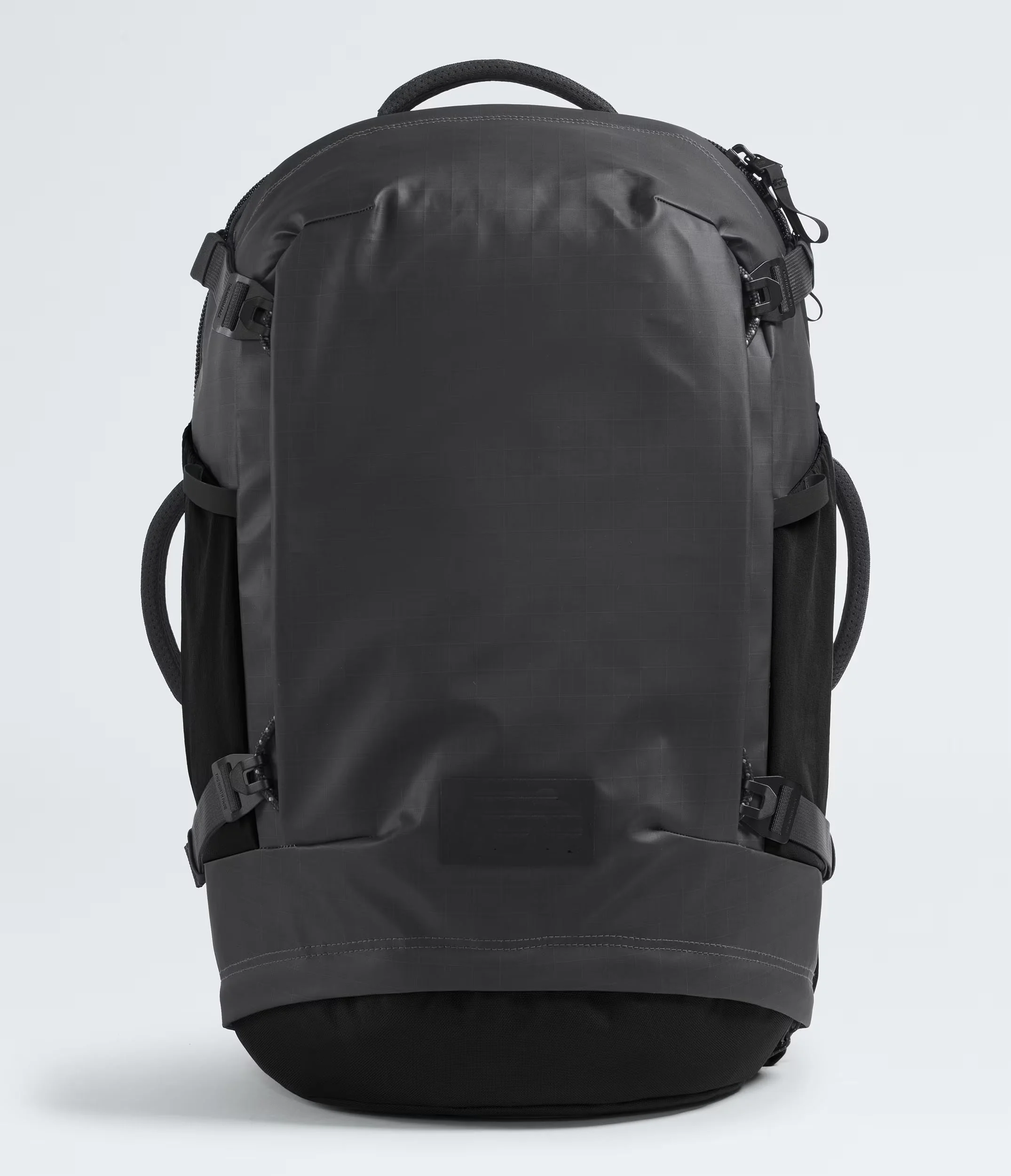
Translate Durability into Use and Risk
Describe where and how the bag is used, what it carries, how it is handled and which condition would make it unacceptable. A high result for one material property is not a whole-bag life prediction.
Wear, seams, tears, edges, lining, supports, closures, handles and hardware can interact with light, cleaning, chemicals, grit and other exposures.
Review the Bag as a Connected System
The shell, supports, lining, seams, handles and closure areas should be reviewed together because the project use can expose more than one part. A durable finish is not necessarily permanent, and a visible surface cannot prove its retention or the life of the bag.
- State intended user, contents, carrying and exposure conditions.
- Name the critical failure risks or unacceptable changes.
- Map shell, support, lining, seam, handle and closure zones.
- Ask what sample construction is proposed for each relevant zone.
- Agree any project-specific method, condition and acceptance evidence.
- Keep final inspection against approved requirements as a later step.
Use This Before Sampling, Not as Final QC
A useful request is: “For this intended use, please show the proposed construction for the marked zones and tell us what sample evidence can address the listed risks. We will agree project criteria separately.”
This is an early procurement brief. The quality inspection guide is used later to inspect against requirements that have already been approved.
Use a Photo to Mark Zones, Not to Prove Durability
This image can help mark visible zones such as the front panel, top handle and opening area for a brief discussion.
It does not prove material durability, reinforcement, load capacity, weather resistance, test performance, maintenance outcome or service life.
Source and Limits
B. P. Saville, Physical Testing of Textiles (1999), PDF pp. 202-203, links serviceability to end use and combined damage. Ann Saunders (2024), PDF p. 189, treats shell, structure and lining as a system. Textiles (1988), PDF p. 309, distinguishes durable from permanent finishes. These sources do not set a current standard, a universal test, a bag lifetime or a pass result.